Avast ye!
Drop the anchor and look at the dashboard. We need to talk about your uptime.
In the world of software engineering, if an enterprise server crashes every single day at 3:00 PM, the engineers do not just accept it. They don’t pour a cup of coffee on the server and hope it reboots. They run diagnostic scripts, analyze the heat outputs, check the memory leaks, and optimize the hardware until the server achieves 99.99% continuous uptime.
Yet, when the biological machine running your entire digital empire—your own body—crashes at 3:00 PM every afternoon, you accept it as normal. You blame it on getting older, you drink a third cup of toxic office coffee, and you stare blankly at your monitor for two hours, producing absolutely nothing of value.
A slow captain sinks the ship.
If you are a Solopreneur operating in late March 2026, you cannot afford the 3:00 PM crash. The creator economy is a zero-sum game of leverage and output. If your competition has optimized their biological hardware to maintain deep, unbroken focus for six hours a day, and you can only manage three hours before your central nervous system taps out, they will eventually crush you. It is a mathematical certainty.
But the era of guessing what your body needs is over. We have entered the age of the “Invisible Doctor.” Today, we are dissecting the most critical wearable AI health trends 2026 has to offer. We are looking at the massive, tectonic shift happening right now: the integration of continuous biometric wearables directly into autonomous Large Language Models.
Let’s look at why the most successful founders are treating their bodies like enterprise servers, and how you can build the ultimate preventative health matrix.
The 3 PM Crash: A Mechanical Failure
Before we look at the technology, we must define the problem. The afternoon crash is not a lack of willpower. It is a cascading mechanical failure of your endocrine and metabolic systems.
When you eat a massive, carbohydrate-heavy lunch while sitting completely sedentary at a desk, your pancreas floods your system with insulin to manage the blood glucose spike. Roughly two hours later, your blood sugar plummets, taking your cognitive function and dopamine levels down with it. Simultaneously, the adenosine (the sleep-pressure chemical) that has been building up in your brain since you woke up finally overcomes your morning caffeine.
You don’t lack motivation; you lack biological management.
💡Captain’s Log / Personal Note:
I used to hit a brick wall every afternoon. I would be mid-way through writing an article for AICashCaptain, and suddenly my brain would completely fog over. I thought I just needed to “hustle harder.” It wasn’t until I started heavily restricting my feeding windows—regularly implementing 72-hour water fasts to reset my insulin sensitivity—that I realized how toxic my daily fluctuations were. Now, my afternoon protocol is ruthless. Instead of heavy carbs, I use a specialized refeed of duckweed for its dense, clean amino acid profile, combined with raw cacao powder for the immediate, crash-free mood boost. It completely eliminated the 3:00 PM fog.
According to an extensive clinical review of circadian misalignment and cognitive performance, these daily crashes reduce executive function and complex problem-solving abilities by up to 40%. For a solopreneur writing code or crafting high-ticket sales copy, a 40% drop in cognitive capability is the difference between closing a client and losing them.
The News Hook: The Q1 2026 API Integrations
The bio-hacking community has used wearables for years. But Q1 2026 marked a massive, permanent shift in how those devices function.
Historically, companies like Whoop, Oura, and Apple kept their data in walled gardens. You had to open their specific app to see your sleep score. But in early 2026, these hardware giants officially opened their advanced APIs to two-way AI integration.
We are seeing the explosive rise of the Continuous Glucose Monitor AI (CGM) integration. Companies like Dexcom and Nutrisense are no longer just showing you a graph of your blood sugar; they are piping that live data directly into personalized AI agents via secure webhooks.
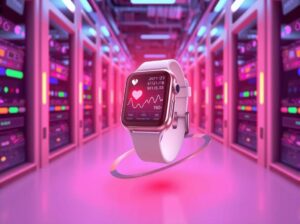
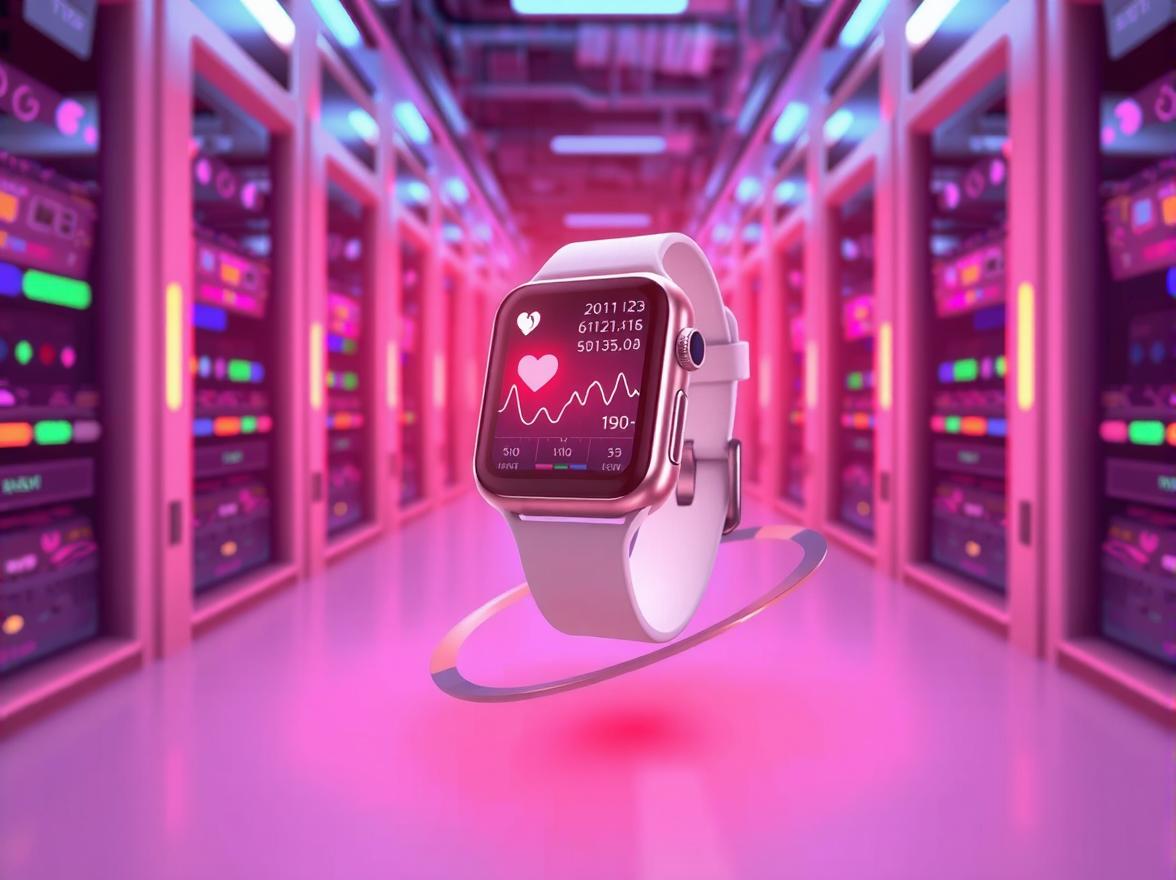
We are also witnessing the highly anticipated Oura ring ChatGPT integration. You no longer have to manually interpret your resting heart rate. Your custom GPT can ping the Oura API in the background every five minutes, acting as a silent sentinel watching your physiological state.
As detailed in the recent developer release notes from Oura Health, this new generation of webhooks allows authorized third-party LLMs to read granular, second-by-second changes in temperature, heart rate variability (HRV), and blood oxygen levels, enabling true, real-time preventative health interventions.
This isn’t a fitness tracker anymore. It is a live telemetry feed for your biological server.
The Shift: From Passive Tracking to Active Intervention
To understand the magnitude of this trend, you must understand the difference between Passive Descriptive Analytics and Active Prescriptive AI.
The 2024 Reality (Passive):
You wake up. You open the app on your phone. It says, “You got 5 hours of sleep last night. Your recovery is 30%.” You look at the screen, say “Well, that sucks,” and proceed to drink a Red Bull and attempt a heavy weightlifting session anyway, ultimately injuring yourself. The data was accurate, but it required you to actively change your behavior, which humans are terrible at doing.
The 2026 Reality (Active):
Your AI agent monitors your sleep in real-time. It sees that you only got 5 hours of sleep and your recovery is 30%.
Before you even wake up, the automated recovery protocols kick in. The AI silently connects to your Google Calendar and pushes your 9:00 AM deep-work block to 11:00 AM. It connects to your Fitbod API and completely deletes the heavy barbell squats scheduled for the afternoon, replacing them with a 20-minute mobility routine. Finally, at 1:00 PM, the AI sends a push notification to your phone: “Your cortisol is rising based on your HRV trend. Take 200mg of L-Theanine immediately with a glass of water to prevent a 3 PM crash.”
The AI doesn’t just tell you that you are breaking down. It actively steps in and adjusts your environment to prevent the breakdown from happening.
💡Captain’s Log / Personal Note:
I operate with some serious structural liabilities. I fractured my L4 vertebra in high school, and I’ve been battling chronic shin splints for years. In the past, if I had a rough Saturday night—maybe drinking five or six beers and getting crossfaded—I would wake up Sunday and try to “punish” myself with a brutal workout or a long, high-impact walk to sweat it out. It was a cycle of ego-driven destruction that would leave my back and shins screaming by Monday morning. The shift to active AI intervention saved me from myself. My AI knows my injury history and it sees my weekend biometric data. When my Sunday HRV is in the gutter, the AI literally overrides my workout plan and orders me to spend 30 minutes outside barefoot doing a grounding protocol. It removes my ego from the equation entirely.
This level of algorithmic intervention is heavily supported by modern sports science. The Huberman Lab’s foundational protocols on deliberate recovery stress that auto-regulating your physical output based on objective biometric feedback—rather than subjective feeling—is the single most effective way to prevent chronic systemic inflammation and central nervous system burnout.
When you hand the keys of your auto-regulation over to an AI that processes data thousands of times faster than you do, you stop reacting to fatigue, and you start preventing it.
The Economics of Energy: Pricing Your Uptime
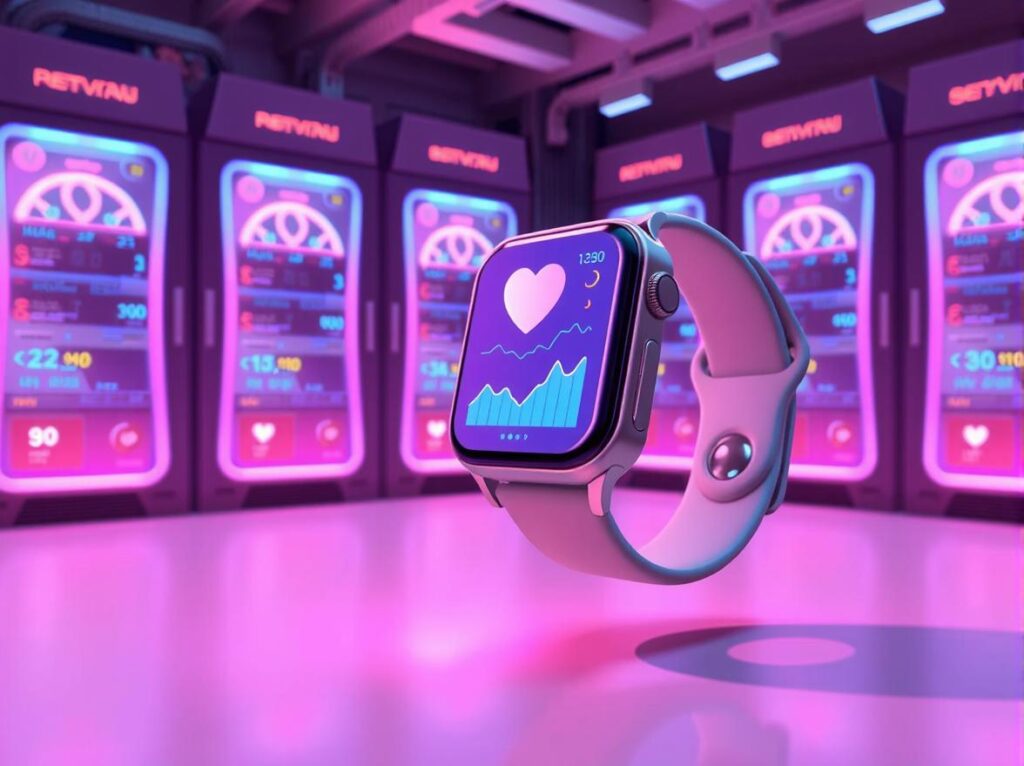
“Captain, this sounds like an expensive setup just to tell me I’m tired.”
If you view wearable AI as a luxury fitness toy, you are calculating the ROI incorrectly. You must evaluate this technology the exact same way you evaluate enterprise SaaS software: by measuring its impact on your bottom line and your operational uptime.
Let’s break down the brutal math of the Solopreneur.
If your digital business generates $150,000 a year, and you work roughly 2,000 hours a year, your baseline hourly rate is $75/hour. However, “deep work” (coding, writing high-ticket sales copy, strategizing) is exponentially more valuable than “shallow work” (answering emails). Your deep work hours are likely worth closer to $250/hour to the actual growth of your empire.
If you suffer from a standard 3:00 PM metabolic crash that destroys just two hours of deep work capacity per day, you are losing 10 hours a week. That is 500 hours a year.
At $250 an hour, your afternoon brain fog is costing your business $125,000 a year in unrealized output.
According to a seminal Harvard Business Review analysis on executive performance, the core differentiator between stagnant managers and hyper-growth founders is not time management; it is energy management. Time is a finite resource, but energy can be systematically expanded and renewed if the biological metrics are tracked.
When you invest $300 in an Oura ring or a Whoop strap, and $20 a month for ChatGPT Plus to act as the analytical brain, you are spending roughly $540 a year. If that AI-connected system prevents you from crashing for just three hours the entire year by warning you to hydrate, take a specific supplement, or delay a heavy meal, the hardware has entirely paid for itself. Everything after that is pure profit.
💡Captain’s Log / Personal Note:
I had to forcibly walk my friend Brock through this exact mathematical equation. He was running himself into the ground trying to scale his agency, consistently burning out by 2:00 PM and relying on three energy drinks just to make it to dinner. He thought bio-tracking was a waste of time. I finally convinced him to get a continuous glucose monitor (CGM) and sync the data to an AI analysis engine. The AI instantly identified that his “healthy” morning oatmeal was spiking his blood sugar to 180 mg/dL, causing a massive reactive hypoglycemic crash four hours later. He swapped the oatmeal for lean protein, the crashes vanished overnight, and his billable output doubled. He wasn’t lacking discipline; he was just operating blind.
By integrating predictive algorithms into your daily routine, you transition your biology from a volatile liability into a predictable, highly scalable asset. You can read the McKinsey global report on AI and worker productivity to see exactly how massive corporations are viewing biological and cognitive optimization as the next massive frontier for enterprise efficiency. You are simply applying that enterprise mindset to a team of one.
Building the Closed-Loop System (CGMs & API Tokens)
To achieve this level of optimization, you must build what systems engineers call a “Closed-Loop System.”
In a traditional medical model, you get bloodwork done once a year. Your doctor looks at a static snapshot of your lipids, tells you to eat less sodium, and sends you home. That is an “Open Loop.” The data is delayed, and the feedback is generic.
In the 2026 bio-hacking model, the loop is closed and continuous.
The Rise of the Continuous Glucose Monitor (CGM)
The most powerful tool in this new arsenal is the AI-linked CGM. You apply a small, painless sensor to the back of your arm that reads your interstitial fluid 24/7. Companies like Levels Health have pioneered the software layer for this, but the API unlocks in early 2026 changed the game.
When you connect a CGM directly to a custom AI agent, it doesn’t just show you a graph. It learns your unique metabolic fingerprint. It learns that if you eat a banana by itself, you spike. But if you eat a banana after a 20-minute walk, you remain stable.
The AI then becomes a prescriptive engine. It can send a webhook to your phone at 11:30 AM saying: “Based on your current glucose baseline and yesterday’s sleep debt, eating a carbohydrate-heavy lunch today will result in an 85% probability of a severe afternoon crash. I strongly recommend a zero-carb, high-fat meal to maintain your cognitive baseline for your 2:00 PM client presentation.”
Wearables as the “Check Engine” Light
Similarly, the integration of HRV (Heart Rate Variability) tracking via wearables provides an early warning system for central nervous system burnout.
For a deep, clinical understanding of why HRV is the ultimate metric for systemic stress, the National Institutes of Health (NIH) published extensive data on wearable tech and metabolic flexibility, proving that drops in HRV precede physical sickness and cognitive decline by up to 48 hours.
Your AI watches this metric like a hawk. If it sees your HRV trending downward for two consecutive days, it acts as your “Check Engine” light, intervening before the engine blows a gasket.
The Captain’s Verdict: Stop Guessing
You would never drive your car across the country with a broken fuel gauge and a shattered speedometer. You would never launch a massive digital advertising campaign without installing a tracking pixel to measure the conversion rate.
Yet, millions of entrepreneurs try to build massive digital empires while running their bodies completely blind.
Stop guessing what your body needs. Stop assuming that you just need another cup of coffee. Look at the dashboard.
If you are serious about playing the long game in the creator economy, you must upgrade your hardware and connect it to a digital brain. Let the AI process the millions of data points your body generates every day, and let it give you the exact, hyper-personalized instructions you need to maintain continuous uptime.
💡Captain’s Log / Personal Note:
My cousin-in-law Dalton and I were discussing this over the holidays. He assumed that wearables and AI trackers were strictly for professional athletes or fitness influencers. I showed him my automated calendar. I showed him how my AI agent reads my Oura ring data every morning, calculates my physical readiness score, and physically blocks out my afternoon calendar if it detects that my immune system is fighting off a bug. I don’t even have to think about it; the AI just protects my energy automatically. Dalton realized that this isn’t about having a six-pack; it is about building an impenetrable defense system for your business.
The tools are cheap. The APIs are open. The only thing standing between you and optimal biological efficiency is your willingness to build the system.
For founders looking to deploy these systems at a company-wide scale, platforms like Oura for Business are already rolling out enterprise-grade dashboards, proving that biometric AI integration is rapidly becoming a standard corporate benefit.
The Connection: Build the Brain
Having the data is useless if you don’t have an engine to process it.
On Wednesday, we published the exact, step-by-step technical tutorial on how to program the LLM that will serve as the brain for this entire operation.
If you want to know how to upload your biological baseline, hardcode your injury constraints, and establish an automated “Morning Sync” that tells you exactly how hard to push each day, read the guide: Stop Following Generic Advice: How to Build Your Own AI Health Coach.
You have the hardware on your wrist. Go build the software.
Conclusion: Upgrade Your Hardware
The internet used to be a place where the person willing to sacrifice the most sleep won. The “hustle culture” of the 2010s glorified the founder who slept under their desk and worked 100-hour weeks.
In 2026, the founder who sleeps under their desk gets crushed by the founder who sleeps 8 optimized hours, wakes up with a fully recovered central nervous system, and uses AI agents to do 100 hours of work in 10.
The game has changed from brute force to biological leverage.
Your competition is no longer just working hard. They are using Continuous Glucose Monitors and AI-integrated wearables to ensure their brains are operating at absolute peak capacity during every single minute of their working block. They do not experience the 3:00 PM crash. They do not lose days to preventable burnout.
A slow captain sinks the ship.
Stop running your enterprise server blind. Strap the monitor to your arm, plug the API into your AI, and take control of your biology.
Upgrade your hardware, Captain.