Avast ye!
Drop the anchor and listen close.
We talk a lot about leverage on this ship. We automate our emails, we script our social media using AI, and we use tools to edit our footage while we sleep. But even with the perfect software stack, every creator eventually hits an insurmountable wall: The limit of the human body.
You can only sit under studio lights, read a teleprompter, and project high energy for a few hours a day before your voice cracks and your eyes glaze over. If you want to post daily on YouTube, TikTok, and Instagram, the physical act of filming becomes your biggest bottleneck.
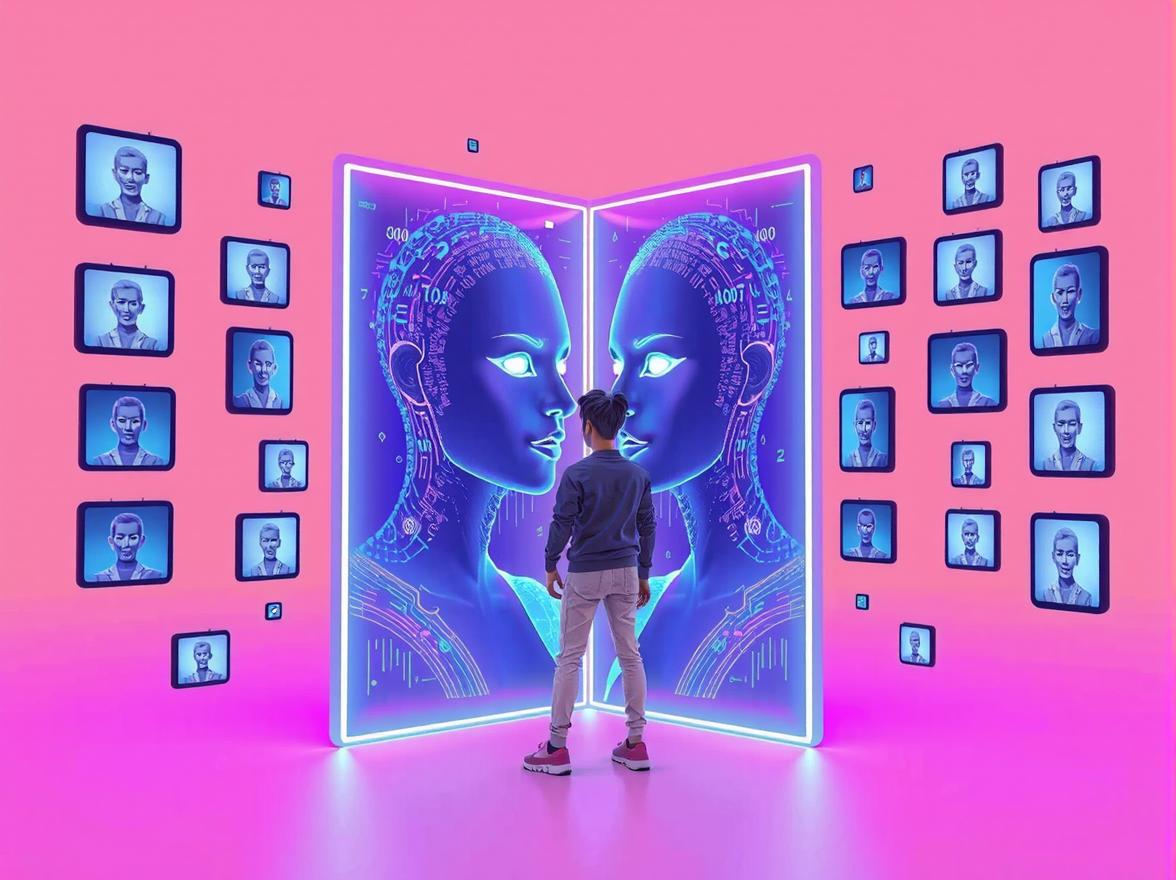
The solution to scaling your physical presence is the Digital Twin.
For years, AI video avatars were a gimmick. They suffered from the “Uncanny Valley”—that creepy, unsettling feeling you get when a digital face looks almost human, but the eyes are dead and the lip-sync is slightly off.
In early March 2026, the Uncanny Valley has officially been crossed.
The latest generation of AI video models can replicate your exact micro-expressions, your vocal cadence, and your subtle hand gestures. You can type a script, hit render, and watch “yourself” deliver a flawless presentation in 40 different languages.
Today, we are reviewing the titans of the synthetic video space: HeyGen vs. Synthesia vs. Arcads.
Which one is the best AI video avatar generator 2026 has to offer? Let’s examine the clones.
The End of the Uncanny Valley
Before we dive into the specific platforms, you need to understand why 2026 is the inflection point for this technology.
Historically, CGI required human animators to painstakingly map facial movements. It was expensive, slow, and often resulted in avatars that felt robotic. If a digital face lacks the micro-twitches of real human muscle, our brains instantly reject it as a threat.
But modern AI models don’t animate; they predict. By training on millions of hours of human video, these systems understand exactly how a cheekbone shifts when a person smiles, or how the eyes narrow during a moment of confusion.
According to recent research on AI and the Uncanny Valley, the traditional “tells” of AI generation—like unnatural lighting, stiff shoulders, and awkward blinking—have been completely ironed out by advanced neural rendering. The technology has shifted from a novelty to a highly scalable business asset.
You are no longer limited to the hours you are awake. You are the Infinite Spokesperson.
Tool 1: HeyGen (The “Hyper-Realist”)
Best For: Solo creators, personal branding, and influencers who need to clone their exact face and voice.
Focus: Micro-expressions, lifelike custom avatars, and cinematic realism.
URL: HeyGen.com
If your goal is to make your audience believe that you actually sat down and recorded the video, HeyGen is the undisputed champion.
While other platforms focus on providing a library of generic actors, HeyGen’s superpower is its “Custom Avatar” engine. It is specifically designed to capture the unique nuances of your individual face, making it the premier choice for creators building a personality-driven brand.
The Killer Feature: The “Instant Avatar” Precision
Training a HeyGen avatar is frighteningly simple. You record a 2-minute video of yourself reading a generic script in a well-lit room. You upload it. Thirty minutes later, your digital clone is ready.
What sets HeyGen apart is how it handles the lower half of the face. The lip-sync technology doesn’t just open and close the mouth; it accurately renders the tension in the jaw, the shape of the teeth, and the subtle tongue movements associated with specific syllables.
The “Motion-Driven” Upgrade
In 2026, HeyGen released advanced motion-driven features. If your script includes an emotional shift—like transitioning from a serious tone to a laugh—the AI fluidly alters your avatar’s posture and eye contact to match the sentiment. It doesn’t just read the words; it performs them.
💡Personal Note:
Building a sports network requires constant, daily updates on local games and team stats. Physically sitting down to record a sports desk segment every single morning is exhausting. I trained a custom HeyGen clone wearing my standard studio gear. Now, I just drop the daily scores into a text box, and my digital twin delivers the CWSN morning update flawlessly. The audience hasn’t noticed the difference, and it saves me 15 hours a week.
While the output is spectacular, the platform does have a steep learning curve if you want to push the boundaries of its API. A comprehensive 2026 review of HeyGen’s workflow notes that its true value unlocks when you integrate it directly into your content pipeline, replacing the need for a physical camera entirely.
Tool 2: Synthesia (The “Corporate Standard”)
Best For: B2B companies, agencies, corporate trainers, and high-volume standard operating procedures (SOPs).
Focus: Reliability, massive avatar libraries, and enterprise-grade infrastructure.
URL: Synthesia.io
If HeyGen is the indie film director striving for artistic realism, Synthesia is the Fortune 500 CEO optimizing for massive global scale.
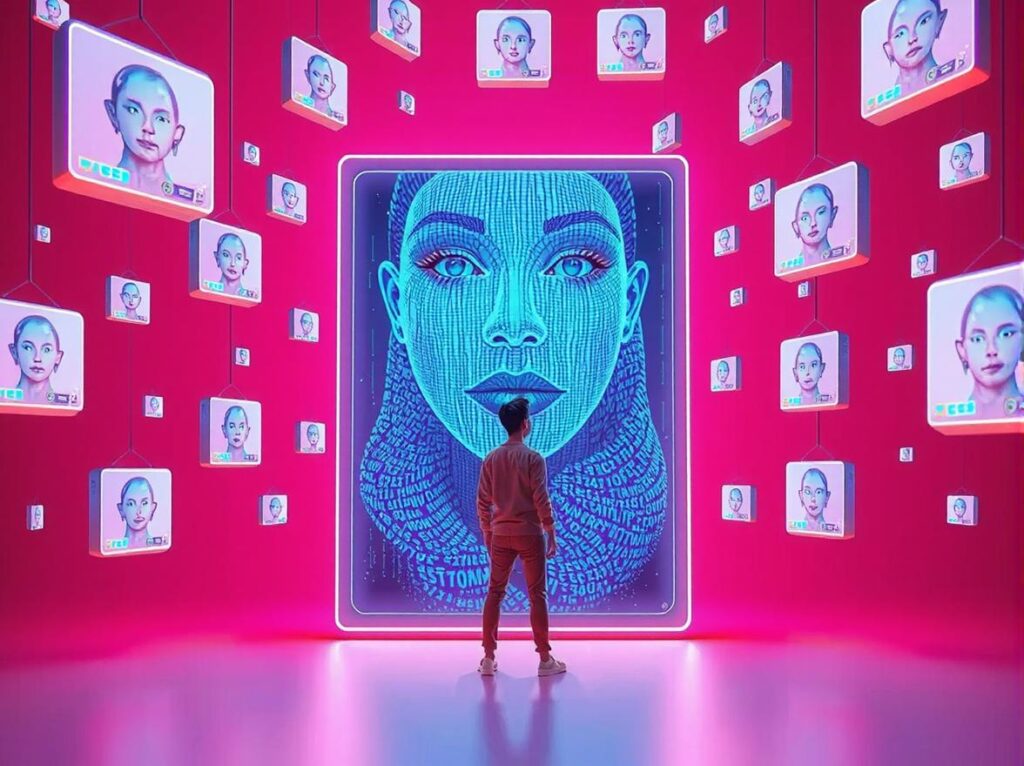
Synthesia is the pioneer of this space. They established the market, and they remain the gold standard for businesses that need to produce hundreds of professional, reliable videos without the friction of a live production set.
The Killer Feature: The “Stock Library” and Multilingual Reach
You don’t need to clone yourself to use Synthesia. They offer over 240 highly diverse, studio-quality actors ready to go out of the box.
Their strongest asset is localization. You can type a script in English, select a professional avatar, and hit a button to instantly translate the audio and perfectly remap the lip-sync into 140+ different languages. This effectively allows a one-person business to launch a localized marketing campaign in Japan, Brazil, and Germany simultaneously.
The Infrastructure Advantage (Sora 2 & Veo 3)
Synthesia isn’t just generating the person; they are generating the environment. By integrating with leading models like Sora 2 and Veo 3, Synthesia allows you to create dynamic, cinematic backgrounds behind your avatar. You aren’t just putting a face on a green screen; you are placing an actor inside a fully realized, AI-generated set.
💡Personal Note:
I don’t use Synthesia for my front-facing content on AICashCaptain—I prefer the hyper-realism of my HeyGen clone for that. But I use Synthesia exclusively for the backend of my business. When I create internal training videos or standardized operating procedures, I use a generic Synthesia avatar. It keeps the tutorials clinical, clear, and perfectly paced without my personal branding getting in the way.
The sheer processing power required to render these videos instantly at scale is staggering. Synthesia’s backend relies heavily on robust cloud architecture, utilizing NVIDIA GPU-accelerated instances on AWS to cut rendering times from days down to minutes, ensuring that enterprise clients never face a bottleneck.
For a deeper look into the psychology of how audiences receive these corporate avatars, studies on artificial intelligence news anchors emphasize that while extreme realism is crucial for personal connection, a clean, predictable, and professional avatar is often superior for simple information delivery.
Tool 3: Arcads (The “UGC Machine”)
Best For: E-commerce brands, dropshippers, TikTok ad agencies, and faceless channel automation.
Focus: User-Generated Content (UGC), raw “iPhone” aesthetics, and scroll-stopping authenticity.
URL: Arcads.ai
If HeyGen is a Hollywood studio and Synthesia is a corporate boardroom, Arcads is a teenager’s bedroom. And in 2026, that bedroom is where the most money is being made.
The biggest problem with AI avatars is that they often look too good. If you are scrolling through TikTok and you see a perfectly lit, perfectly framed spokesperson sitting in front of a blurred background, your brain immediately screams, “This is an ad!” and you swipe away.
Arcads solves the “Ad Fatigue” problem by doing the exact opposite. They generate avatars that look like normal, everyday people holding an iPhone in their car, walking down the street, or sitting on their couch.
The Killer Feature: “UGC at Scale”
User-Generated Content (UGC) is the highest-converting video format on social media. People buy from people who look like them.
Normally, if you run an e-commerce brand, you have to pay a UGC creator $150 to record a 30-second video reviewing your product. With Arcads, you type your script into a dashboard, select a “casual” AI actor, and hit generate. Within minutes, you have a completely believable video of a guy walking his dog while talking about your software.
It is the ultimate cheat code to automate a TikTok faceless channel. You never have to show your own face, and you never have to pay an actor.
💡Personal Note:
I run a few experimental faceless TikTok channels where I test different affiliate marketing offers. Before Arcads, I had to splice together stock footage, which got terrible retention. I swapped the stock footage for an Arcads AI actor “vlogging” from their kitchen about the affiliate product. My conversion rate tripled overnight. It doesn’t look like an ad; it looks like a friend giving advice.
For a deeper understanding of why this raw aesthetic dominates short-form video, TikTok’s own business insights on UGC show that ads utilizing creator-led, native-looking formats achieve a 145% higher view-through rate than polished studio commercials.
The “Turing Test”: Head-to-Head Comparison
Marketing copy is useless without a stress test.
I took the same 60-second script—an emotionally charged introduction to a new YouTube video—and fed it into all three platforms. I was looking for the “Turing Test” winners: Which avatar could fool a human audience into thinking it was real?
Here is the breakdown of the results.
1. The Lip-Sync and Micro-Expression Test
- HeyGen: (Winner) The gold standard. When the script called for a subtle smirk, the custom HeyGen avatar delivered it. The lip collision (how the lips press together on “B” and “P” sounds) was physically accurate.
- Synthesia: Excellent, but slightly rigid. It nailed the pronunciation, but the eyes felt a little too locked-in on the camera. It felt like a very well-trained news anchor, lacking casual warmth.
- Arcads: Highly effective because of the context. The “shaky cam” effect of the UGC style hides minor lip-sync imperfections perfectly. The brain is so distracted by the moving background that it forgives any AI glitches.
2. The Voice Cloning and Emotion Test
The visual is only half the battle. If the voice sounds like Siri, the illusion shatters.
- HeyGen: Allowed me to upload my own ElevenLabs voice clone directly via API. The result was a 1:1 match of my actual speaking voice, complete with my specific Washington-native inflections.
- Synthesia: Their native voice library is massive and highly professional, but getting a casual, conversational tone requires heavily tweaking the SSML (Speech Synthesis Markup Language) tags.
- Arcads: (Winner for Ads) Arcads excels at the “TikTok Voice.” The voices they provide naturally include the fast-paced, breathless, high-energy cadence required to stop the scroll.
If you want to read more about how AI is officially beating human detection, this fascinating video from GDC 2025 details how the latest neural rendering models have successfully bypassed our brain’s innate defense mechanisms against synthetic faces.
The Captain’s Verdict: Which Clone Should You Build?
You cannot be everywhere at once. The human body requires sleep. The algorithm does not.
If you want to print money while you are offline, you need to deploy a Digital Twin. But you must choose the right tool for the specific battlefield you are fighting on.
1. The Personal Brand / YouTuber
Winner: HeyGen
If your business relies on your face—if you are a coach, a consultant, or a YouTube creator—you must use HeyGen. Take the afternoon to train a Custom Avatar. Use it to record your YouTube intro hooks, your weekly newsletters, and your course modules. It is the only platform that protects the integrity of your personal brand.
- Verdict: The absolute best AI video avatar generator 2026 for personal cloning.
2. The Agency / B2B Consultant
Winner: Synthesia
If you are building SOPs for your team, creating onboarding videos for a SaaS product, or running a corporate training agency, Synthesia is the workhorse. You don’t need raw emotion; you need clarity, localization, and speed.
- Verdict: The most reliable tool for enterprise-grade video scaling.
3. The E-Commerce Brand / Faceless Marketer
Winner: Arcads
If you are running Facebook Ads, TikTok Shop campaigns, or building anonymous cash-cow channels, do not use studio avatars. Use Arcads. The raw, UGC style is the only way to bypass banner blindness in 2026.
- Verdict: The ultimate tool for performance marketing and social media advertising.
💡Personal Note:
There is a mental hurdle you have to get over when you first publish a video of “yourself” that you didn’t actually film. It feels like cheating. But when you realize that your audience is getting high-quality, valuable information consistently—while you get to spend your Saturday actually living your life instead of being chained to a teleprompter—that guilt disappears completely.
The creator economy is shifting from a game of effort to a game of leverage. Forbes’ latest analysis on the Creator Economy predicts that by 2027, over 50% of educational and promotional video content online will feature synthetic or partially synthetic human generation.
Don’t get left behind doing manual labor.
Your Weekend Mission:
- Pick the platform that matches your goal.
- Sign up for the free trial.
- Generate a 30-second test video and post it to your smallest social channel.
- See if anyone notices. (Spoiler: They won’t).
Scale your ship, Captain.