Avast ye! We need to have a serious talk in the Captain’s quarters.
For the last two years, selling AI-generated art on Print-on-Demand (POD) platforms has been the easiest gold rush in digital history. You generated a “Cyberpunk Cat,” slapped it on a shirt, and collected the royalties. But as we sail into 2026, the winds have shifted violently.
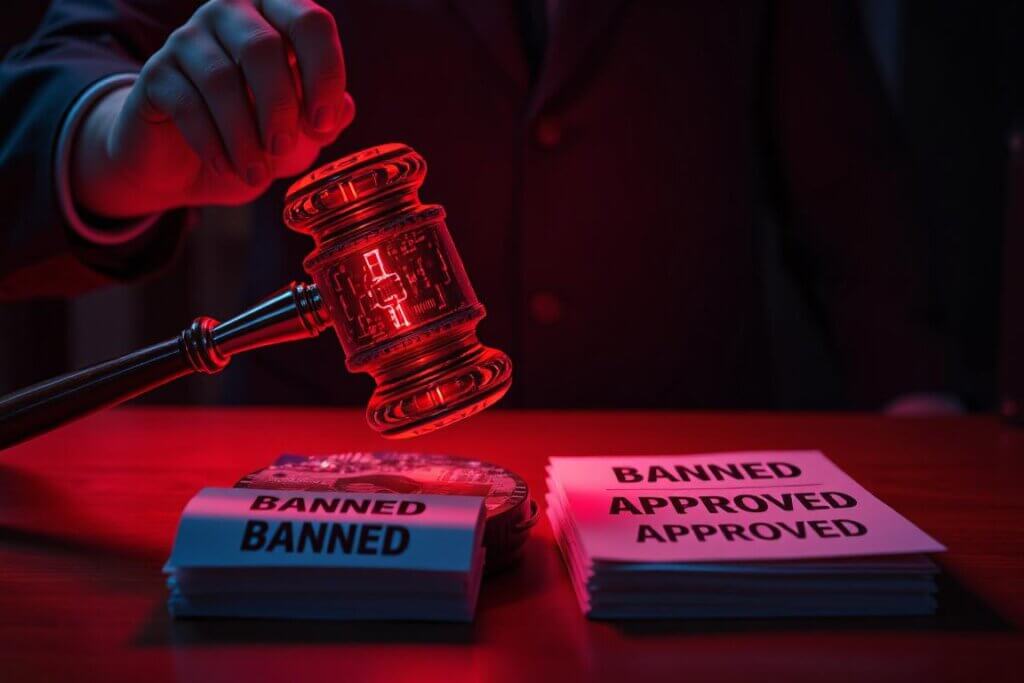
Major platforms like Etsy and Amazon Merch on Demand are quietly rolling out stricter Terms of Service (ToS) updates. They aren’t banning AI; they are banning lazy AI.
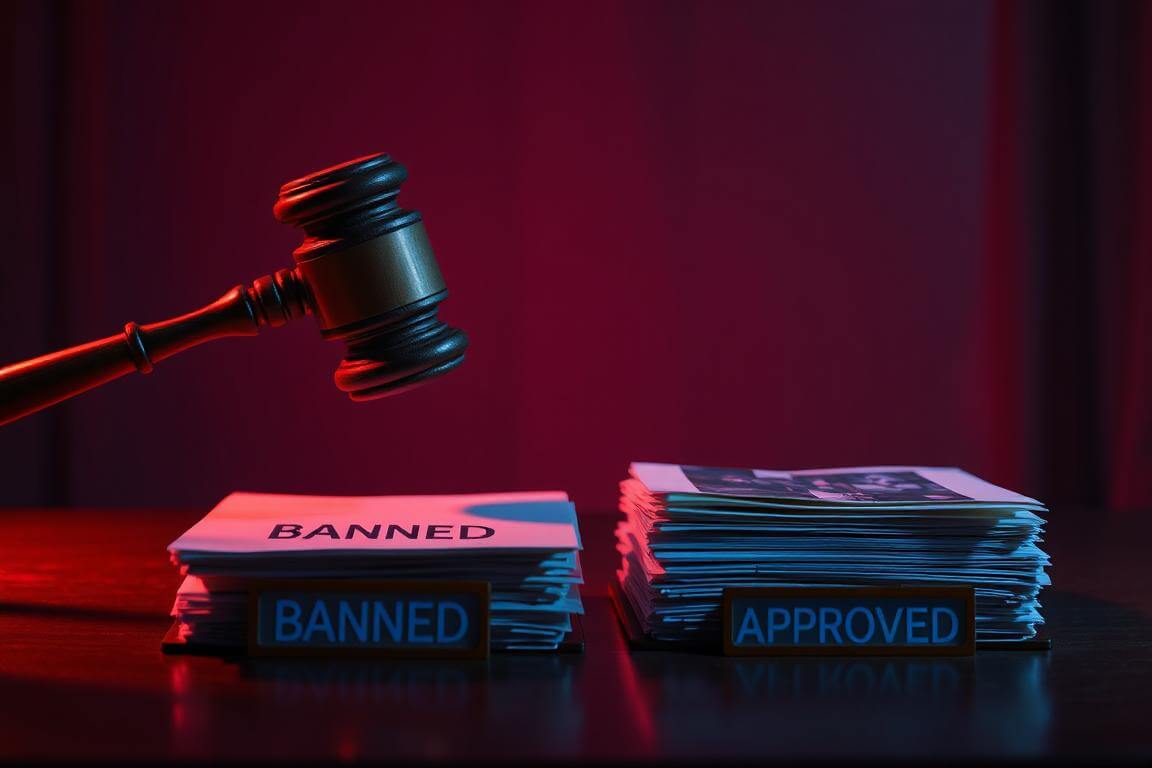
Rumors have been swirling in the seller forums for months, and now the reality is here. “The Purge” has begun. Accounts that look like “Spam Farms”—uploading thousands of unchecked, generic AI images—are being suspended without warning. The days of “Set it and Forget it” are over.
If you want to keep your income safe, you need to understand the new selling AI art copyright rules 2026. Ignorance is no longer a defense; it is a one-way ticket to a permanent ban.
The “Copyright” Reality Check (What the Law Actually Says)
Before we look at the specific platform rules, we must look at the law of the land. There is a massive misconception among new sailors that “If I generated it, I own the copyright.”
False.
The United States Copyright Office (USCO) has made its stance crystal clear, and they have doubled down on it for 2026: Copyright protection requires human authorship.
- Pure AI: If you type a prompt into Midjourney and get an image, that image is effectively “Public Domain.” You cannot copyright it. This means if someone steals your raw AI image and puts it on a mug, you technically cannot sue them for copyright infringement.
- The Nuance: However, this does not mean you cannot sell it. You can sell Public Domain art (just like you can sell a poster of the Mona Lisa). The risk isn’t that you are breaking the law by selling it; the risk is that you have no protection if someone copies you.
The “Sufficient Human Authorship” Loophole:
The USCO will grant copyright if there is “significant human modification.” This is your shield. If you take an AI image and use Photoshop to paint over 30% of it, add unique hand-drawn elements, or create a complex collage, you can copyright the human-created parts.
For the official word, read the US Copyright Office’s Registration Guidance for AI Works, which outlines exactly where the line is drawn between “Human” and “Machine.”
💡 Personal Note: “I lived through a terrifying ‘Ban Scare’ in late 2024. I woke up to an email from a platform stating my account was under review for ‘Inauthentic Content.’ My heart dropped into my boots. It turned out I had uploaded 50 designs in one hour that were all variations of the same prompt. To their algorithm, I looked like a bot. I survived the review, but it changed how I operate. Now, I never upload raw AI. I always add a filter, a texture overlay, or text in Photoshop just to give it that ‘Human Fingerprint’—and to stay off the bot radar.”
The Big Shift: From “Tool” to “Disclosure”
Why does this legal stuff matter for avoiding an Etsy ban in 2026? Because platforms are now using copyright logic to police their marketplaces.
Etsy and Amazon don’t want to be flooded with millions of un-copyrightable, public domain images that legally belong to no one. It creates a legal mess for them. So, they are shifting the burden to YOU.
In 2026, the rule is no longer just “Don’t steal.” The rule is “Disclose or Die.”
To understand the legal theory behind this shift, BuiltIn’s breakdown of AI Copyright provides an excellent summary of why platforms are getting nervous.
Platform Update 1: Etsy’s “Disclosure” Mandate (The New Checkbox)
Etsy’s 2026 policy update can be summarized in one word: Transparency. They are no longer banning AI art (they realized they can’t stop the tide), but they are segregating it. If you try to hide your AI usage, you are now violating the core “Creativity Standards.”
The “Designed By” Trap
In the past, many sellers listed their AI art as “Handmade” because they “made” the prompt. Do not do this in 2026.
- The Rule: You must select “Designed by” in the “About this Item” section. You can no longer select “I made it” if the primary visual was generated by a machine.
- The Description Field: You are now required to include a clear disclosure in your listing description. A simple sentence works: “This artwork was created with the assistance of AI tools and digitally refined by the artist.”
For the exact wording you need to use, refer directly to Etsy’s Creativity Standards, which were updated to explicitly define “Seller-Prompted AI Creations.”
The “Spam” Filter
Etsy’s new algorithm is aggressively targeting “Low-Effort” shops.
- The Trigger: If you upload 50 listings in a day that all look vaguely similar (e.g., the same “Dog in Space” image just with different breeds), the system flags you as a “Content Farm.”
- The Fix: Slow down. Curate your collection. It is better to have 10 high-quality, distinct listings than 100 spammy ones.
According to data from Marmalead’s 2026 Algorithm Report, shops that upload fewer than 5 high-quality items per week are now ranking higher than bulk-uploaders, proving that the “Spam Strategy” is officially dead.
Platform Update 2: Amazon Merch’s “Quality” Bots
Amazon is a different beast. They don’t care as much about “Handmade” feelings; they care about Intellectual Property (IP) and Customer Experience.
The “Accidental Infringement” Risk
This is the silent killer on Amazon. AI models are trained on existing data. If you ask Midjourney for “A cute superhero mouse,” it might give you something that looks 90% like Mickey Mouse.
- The 2026 Danger: Amazon’s detection bots are now using image recognition to spot these “accidental” infringements. Even if you didn’t mean to copy Disney, if the AI did it, you get the ban.
- The Solution: Never trust the AI blindly. Reverse image search your own designs (using Google Lens) before uploading to ensure you aren’t accidentally selling a trademarked character.
Review the Amazon Merch on Demand Content Policy to see the specific list of prohibited content, which now includes stricter guidelines on “likeness” and “imitation.”
The “Resolution” Rejection
Amazon has raised its quality standards. Listings with blurry text or pixelated edges are being rejected automatically to prevent customer returns. (Refer back to our Wednesday guide on AI upscaling—it is now mandatory for survival).
💡 Personal Note: “I almost lost my entire account because of this. In 2024, I listed a shirt featuring a ‘Cute Baby Alien’ that looked suspiciously like a famous character from Star Wars. I thought because AI generated it, I was safe. Wrong. I got a DMCA takedown notice within 48 hours. It was a terrifying wake-up call. Now, I have a strict rule: If the character has a name (like Mario or Batman), I don’t touch it. I stick to ‘generic’ concepts—like ‘Cyberpunk Samurai’—where I own the creativity 100%.”
The “Human Touch” Loophole: How to Own Your Work
Here is the secret to surviving the selling AI art copyright rules 2026. You need to move from being a “Prompter” to being an “Editor.”
The US Copyright Office has signaled that “Significant Human Authorship” is the key to protection.
- The 30% Rule: Aim to change at least 30% of the raw AI image.
- Add Text: Typography is considered human authorship. A raw image of a cat is public domain. That same cat with a unique, hand-designed slogan is a “Composite Work” that you can protect.
- Collage: Don’t just use one image. Combine elements from three different generations (e.g., a background from Midjourney, a character from Leonardo, and a text overlay from Ideogram). This creates a unique asset that no machine could replicate on its own.
For a deeper legal dive, check out the US Copyright Office’s AI Guidance, which explains exactly how to register works that contain AI elements.
💡 Personal Note: “I recently tested this ‘Human Touch’ theory. I took a raw Midjourney landscape and tried to register it—rejected. I took that same landscape, added a hand-drawn character overlay in Photoshop, and added a vintage filter effect. I documented the process. That version is now my best-selling, fully protected print. The extra 20 minutes of work didn’t just make it better; it made it mine.”
Conclusion: Adapt or Evacuate
The “Wild West” era of AI art is over. The “Professional” era has begun.
The new rules from Etsy and Amazon aren’t trying to kill your business; they are trying to professionalize it. They want to clear out the lazy spammers so that legitimate Captains—like you—can sell high-quality goods.
If you are worried about the broader implications of IP protection for your business, LegalZoom’s Guide to Digital Rights offers excellent advice on how to structure your assets to avoid future lawsuits.
Your Final Order:
- Audit Your Shop: Go through your listings this weekend. Add the “AI Disclosure” to your descriptions.
- Check Your IP: Delete any design that looks even remotely like a famous character. It’s not worth the risk.
- Add the Human Touch: Stop uploading raw JPEGs. Open Photoshop (or Canva) and add value.
The seas are still full of gold, but only for the Captains who sail by the rules. Stay safe, stay profitable, and keep your nose clean.
🔗 Related posts:
- How to Start an AI Print-on-Demand Store in 2026 (No Inventory Required)
- The Merch Wars: Midjourney vs. Ideogram vs. Leonardo — Finding the Best AI Art Generator for T-Shirt Design (2026 Review)
- AI Money-Making Predictions for 2026: 3 Trends That Will Build Wealth (Adapt or Get Left Behind)
- How to Start a Faceless YouTube Automation Channel in 2026 (From 0 to Monetized)